
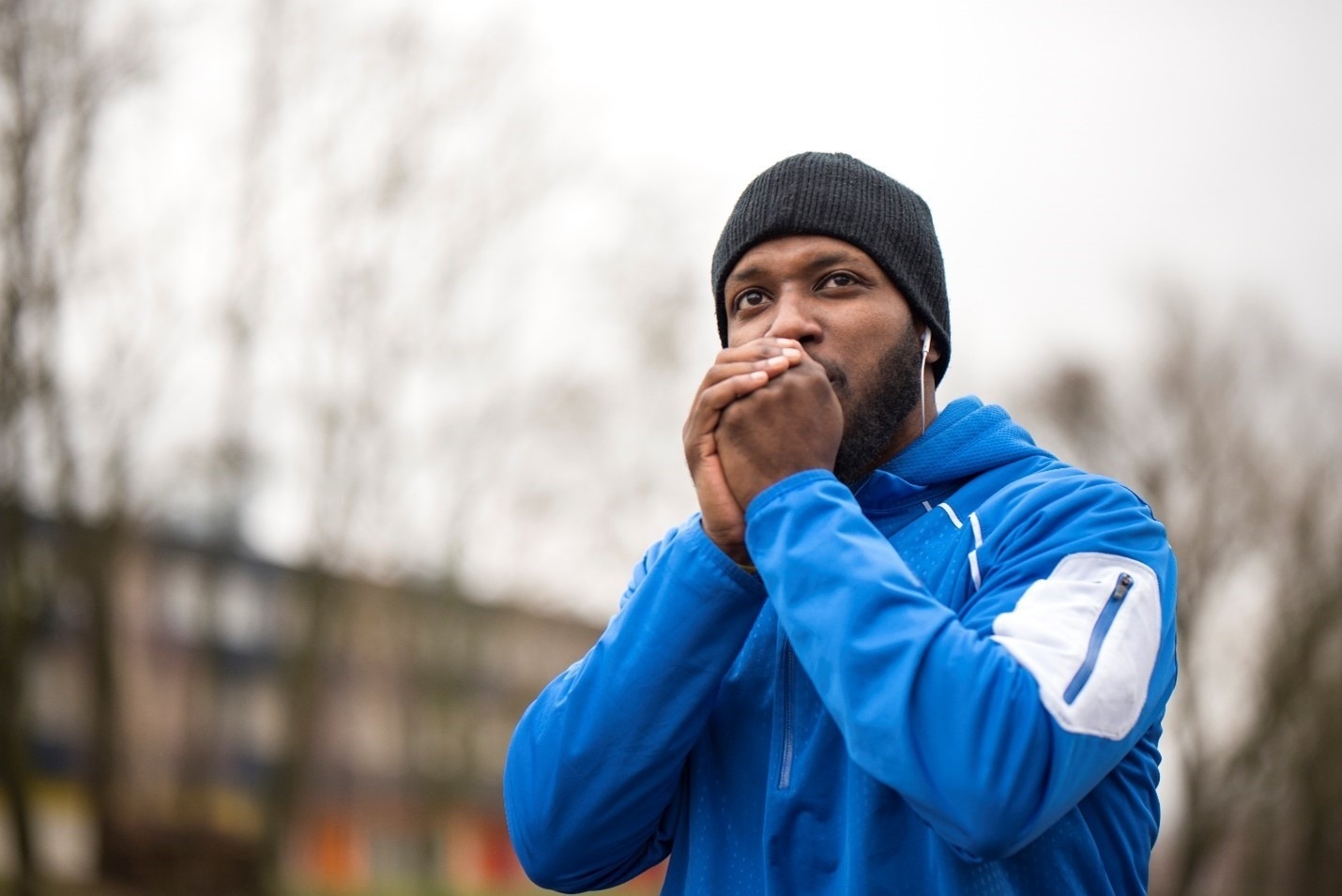
Tiempo de invierno, tiempo de Asma Bronquial.

El Asma Bronquial es una afección de las vías respiratorias que se produce por la disminución del paso de aire a través de estas debido a que las mismas disminuyen su calibre por la contracción de la musculatura de los bronquios y el aumento de la secreción mucosa, lo cual hace que la persona tenga tos, dificultad para respirar y la aparición de un silbido cuando exhala el aire a lo cual se le llama “Sibilancia”.
En cuanto a las estadísticas debemos decir que en USA hay 28 millones de personas que padecen de esta enfermedad (1), Los hispanos tienen una tasa de prevalencia del 6,7 % siendo el tercer grupo racial con mayor porcentaje (2) y que los gastos anuales por esta enfermedad van por los 56 mil millones de dólares (3).
El Asma Bronquial tiene varios factores desencadenantes como son los siguientes: Exposición a productos químicos, alérgenos aerotransportados tales como polen como el polen, los ácaros del polvo, las esporas de moho, la caspa de animales o las partículas de residuos de cucarachas, aire frío, ejercicio al aire libre, exposición al humo, uso de fármacos como los antiinflamatorios no esteroideos y el estrés.
Y como la estación de invierno (que es la temporada de frío y tormentas de nieve) en USA va desde el 1 de diciembre hasta el 28 de febrero, evidentemente las estadísticas de crisis asmáticas estarán en aumento y por ello es necesario seguir los siguientes consejos de prevención:
A-Si usted es un paciente asmático debe vacunarse en contra de la gripe todos los años y para ello debe consultar con su médico tratante o acudir a su centro de salud más cercano en busca de orientación.
B-Cuando salga de su casa colóquese una bufanda para cubrirse la boca ya que este accesorio le permite calentar el aire que respira, lo cual protege sus vías respiratorias evitando la entrada de aire frío.
C-Lavarse las manos con frecuencia y llevar siempre consigo un gel desinfectante, sobre todo cuando anda en sitios públicos como estaciones del metro, centros comerciales y sitios de trabajo.
D-Hacer ejercicios en espacios cerrados ya que hacerlo al aire libre puede desencadenarle una crisis asmática por el frío.
E-Los pacientes asmáticos deben mantenerse alejados de las chimeneas porque el humo es un factor desencadenante y evidentemente se recomienda que estas chimeneas tengan el debido mantenimiento.
F-Todo paciente asmático debe tener un plan de acción: Es decir llevar consigo una identificación que indique que es asmático y si sufre de alergias por algún medicamento, también debe indicar esa información el tratamiento médico que usa de rutina y adicionalmente recomendamos llevar consigo los llamados “Inhaladores” como son el (Ventolin HFA, Proventil HFA, ProAir HFA, Flovent, Pulmicort, Advair, Airduo, Airsupra y Primatene MIST) que únicamente deben ser prescritos por su médico tratante.
G-Finalmente, si usted tiene una crisis asmática que no puede resolver por sí misma y se encuentra en el hogar, trabajo o en la calle debe llamar inmediatamente al (911) y luego al familiar más cercano.
Winter time, Bronchial Asthma time.

Bronchial Asthma is a condition of the airways that is caused by the decrease in the passage of air through the airways due to the decrease in caliber due to the contraction of the bronchial muscles and the increase in mucous secretion, which causes the person to cough. difficulty breathing and the appearance of a whistling sound when exhaling air which is called “wheezing”.
Regarding statistics, we must say that in the USA there are 28 million people who suffer from this disease (1), Hispanics have a prevalence rate of 6.7%, being the third racial group with the highest percentage (2) and that the annual expenses for this disease are 56 billion dollars (3).
Bronchial Asthma has several triggers such as the following: Exposure to chemicals, airborne allergens such as pollen such as pollen, dust mites, mold spores, animal dander or cockroach waste particles, cold air, outdoor exercise, exposure to smoke, use of drugs such as non-steroidal anti-inflammatory drugs and stress.
And since the winter season (which is the cold season and snowstorms) in the USA runs from December 1 to February 28, obviously the statistics of asthma attacks will be increasing and therefore it is necessary to follow the following prevention tips:
A-If you are an asthmatic patient, you should be vaccinated against the flu every year and for this you should consult your treating doctor or go to your nearest health center for guidance.
B-When you leave your house, put on a scarf to cover your mouth since this accessory allows you to heat the air you breathe, which protects your respiratory tract by preventing the entry of cold air.
C-Wash your hands frequently and always carry a disinfectant gel with you, especially when you walk in public places such as subway stations, shopping centers and workplaces.
D-Do exercises in closed spaces since doing it outdoors can trigger an asthmatic attack due to the cold.
E-Asthmatic patients should stay away from fireplaces because smoke is a triggering factor and it is obviously recommended that these fireplaces have proper maintenance.
F-Every asthmatic patient must have an action plan: That is, carry with you an identification that indicates that you are asthmatic and if you suffer from allergies due to any medication, you must also indicate that information the medical treatment you use routinely and additionally we recommend carrying with you the so-called “Inhalers” such as (Ventolin HFA, Proventil HFA, ProAir HFA, Flovent, Pulmicort, Advair, Airduo, Airsupra and Primatene MIST) which should only be prescribed by your treating doctor.
G-Finally, if you have an asthma attack that you cannot resolve on your own and you are at home, work or on the street, you should call (911) immediately and then the next of kin.