
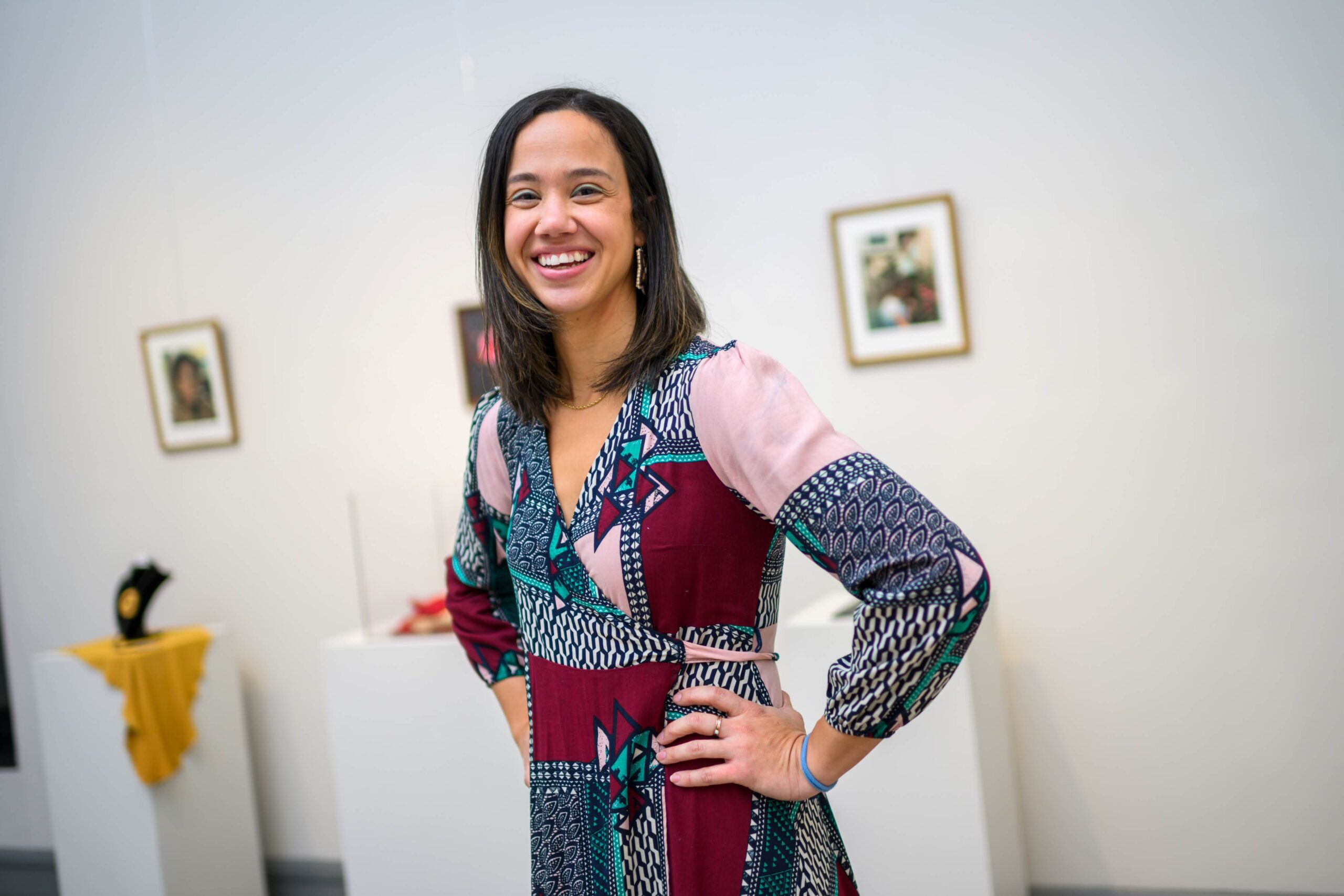
De los Ancestros al arte

La Galería Mezzanine presenta “El Jardín” de Renita Coursey

La exposición de Coursey reúne trabajos de cuentas, faldas de cinta y atuendos arraigados en la cultura Nanticoke y el diseño contemporáneo.
La Mezzanine Gallery de la División de Artes de Delaware se complace en presentar The Garden, una exposición individual de nuevas obras de Renita Coursey, Artista Individual Fellow en Artes Populares 2025. La exposición estará abierta del 5 al 26 de diciembre de 2025 en la Mezzanine Gallery, situada en el Edificio Carvel State Office en el 820 de N. French Street en Wilmington.
El Jardín ofrece una visión íntima de la evolución de la práctica artística de Coursey, entrelazando la tradición nanticoke, el diseño contemporáneo y un profundo sentido de responsabilidad cultural. A través del trabajo con cuentas, faldas de cinta y trabajos en técnicas mixtas, Coursey cultiva un espacio creativo basado en la identidad, la ascendencia y la conexión intergeneracional.
La exposición refleja su camino para reconectar con sus raíces y honrar las enseñanzas, prácticas y personas que guían su obra.

Nativa de Delaware, Coursey creció en tierras de Nanticoke en Millsboro, rodeada de la vida cultural de su comunidad tribal. Aunque de niña se sentía tímida durante los bailes que se celebraban frente a su casa, cerca del Centro Tribal Indio de Nanticoke, esas primeras experiencias moldearon su comprensión de la tradición, el sentido de pertenencia y la línea creativa. Tras mudarse a Virginia a los once años y servir cuatro años en la Marina de los Estados Unidos como sanitaria hospitalaria, Coursey permaneció en Hawái para completar su Licenciatura en Ciencias en la Universidad de Hawái en Manoa antes de regresar finalmente a Delaware.
Al regresar, sintió un renovado impulso hacia la conexión ancestral y comenzó a enseñarse a sí misma a trabajar con cuentas, a menudo a altas horas de la noche o antes del amanecer, mientras cuidaba de su hijo pequeño. Esa práctica se convirtió en una forma de arte disciplinada e intencionada. Más tarde aprendió a hacer faldas de cinta de ancianos tribales de su ciudad natal, profundizando su conexión con su abuela, una costurera a la que nunca llegó pero con la que hoy se siente cercana a través de su trabajo. Ahora Coursey combina estilos tradicionales nativos con streetwear moderno, creando trabajos de cuentas y prendas que honran la herencia mientras rompen los límites creativos.
Su compromiso con la cultura y el oficio se equilibra con su trabajo en medicina veterinaria de urgencias, donde ha pasado ocho años cuidando a pacientes gravemente enfermos. También es madre de dos hijos, un hilo conductor que ella considera una de sus mayores inspiraciones artísticas. Coursey fundamenta su práctica creativa en la paciencia, la oración y el propósito, rezando a menudo por el bienestar del futuro usuario de cada pieza de abalorios. Cita la inspiración de artistas nativos como Samantha Whitefeather, Gina Tiger, Skye Paul y diseñadores detrás de marcas contemporáneas de propiedad nativa como B Yellowtail y Urban Native Era.
Mientras sigue ampliando su voz artística, Coursey explora el baile powwow, la confección de regalias, la construcción de mocasines y técnicas mixtas. Su Fellowship apoya esta expansión, permitiéndole crear nuevas regalias, adquirir suministros y seguir perfeccionando su trabajo para los powwows y más allá.
El Jardín invita a los visitantes al terreno emocional, cultural y espiritual del mundo de Coursey, un espacio donde la tradición y la innovación florecen lado a lado, arraigadas en la gratitud hacia las generaciones anteriores y la esperanza para quienes aún están por venir.
Coursey comparte sobre la exposición:
Una colección de mis propios trabajos de cuentas, algunos atuendos tradicionales y algunas piezas modernas, hechas usando una técnica de puntada plana de dos agujas. Al igual que la jardinería, el trabajo con cuentas me pide paciencia. Me ha mostrado el valor que tienen los pequeños esfuerzos con el tiempo.
El progreso es silencioso.
Un verdadero trabajo hecho con amor.
El jardín…
Es un lugar donde crece algo bueno. Donde he aprendido que los errores son una puerta. Un lugar que guarda vacío, inquebrantable, sabiendo que se llenará de vida una y otra vez. Es por donde he llorado,
Con los que reí, anhelé y agradecí a quienes han tenido una influencia innegable en mi vida. Tanto los que están aquí, como los que han ido.
Cada pieza está de alguna manera inspirada o dedicada a un alma que amo profundamente.
La Galería Mezzanine está abierta de lunes a viernes, de 8:00 a 16:30. La entrada es gratuita.
Sobre la artista
Renita Coursey, nacida en Millsboro, Delaware, es artista de Nanticoke, madre, veterana militar y profesional de medicina veterinaria de urgencias. Becaria Individual Artist en Artes Populares 2025, combina el trabajo tradicional de abalorios nativoamericanos con ropa urbana moderna, creando faldas de cinta, atuendos y piezas intrincadamente adornadas que reflejan tanto su herencia cultural como sus influencias contemporáneas. Tras obtener su Licenciatura en Ciencias en la Universidad de Hawái en Manoa, Coursey pasó ocho años trabajando en medicina veterinaria de urgencias mientras criaba a sus dos hijos. Más tarde regresó a Delaware para reconectar con sus raíces nativas y profundizar en su práctica artística, aprendiendo a trabajar con cuentas y a confeccionar faldas de cinta de ancianos tribales y cultivando un estilo personal basado en la intención, la continuidad cultural y la gratitud. Su trabajo ha sido reconocido por instituciones como el Museo, Jardín y Biblioteca de Winterthur y la División de Artes de Delaware.

From Ancestry to Artistry: Mezzanine Gallery presents Renita Coursey’s “The Garden”

Coursey’s exhibition brings together beadwork, ribbon skirts, and regalia rooted in Nanticoke culture and contemporary design.
The Delaware Division of the Arts’ Mezzanine Gallery is pleased to present The Garden, a solo exhibition of new work by 2025 Individual Artist Fellow in Folk Arts, Renita Coursey. The exhibition will be on view from December 5–26, 2025, in the Mezzanine Gallery, located in the Carvel State Office Building at 820 N. French Street in Wilmington.
The Garden offers an intimate view into Coursey’s evolving artistic practice, weaving together Nanticoke tradition, contemporary design, and a deep sense of cultural stewardship. Through beadwork, ribbon skirts, and mixed-media work, Coursey cultivates a creative space grounded in identity, ancestry, and intergenerational connection. The exhibition reflects her journey to reconnect with her roots and to honor the teachings, practices, and people who guide her work.

A native Delawarean, Coursey grew up on Nanticoke land in Millsboro, surrounded by the cultural life of her tribal community. Although she felt shy as a child during the dances held across from her home near the Nanticoke Indian Tribal Center, those early experiences shaped her understanding of tradition, belonging, and creative lineage. After moving to Virginia at age eleven and later serving four years in the U.S. Navy as a Hospital Corpsman, Coursey remained in Hawaii to complete her Bachelor of Science at the University of Hawaii at Manoa before ultimately returning home to Delaware.
Upon returning, she felt a renewed pull toward ancestral connection and began teaching herself beadwork—often late at night or before dawn while caring for her infant son. That practice grew into a disciplined, intentional art form. She later learned ribbon skirt making from tribal elders in her hometown, deepening her connection to her grandmother, a seamstress she never met but feels close to through her work today. Coursey now blends Native traditional styles with modern streetwear, creating beadwork and garments that honor heritage while pushing creative boundaries.
Her commitment to culture and craft is balanced with her work in emergency veterinary medicine, where she has spent eight years caring for critically ill patients. She is also a mother of two, a throughline she credits as one of her strongest artistic inspirations. Coursey grounds her creative practice in patience, prayer, and purpose, often praying for the wellbeing of the future wearer of each beadwork piece. She cites inspiration from Native artists such as Samantha Whitefeather, Gina Tiger, Skye Paul, and designers behind contemporary Native-owned brands like B Yellowtail and Urban Native Era.
As she continues to grow her artistic voice, Coursey is exploring powwow dancing, regalia making, moccasin construction, and mixed media. Her Fellowship supports this expansion, allowing her to create new regalia, acquire supplies, and continue refining her work for powwows and beyond.
The Garden invites visitors into the emotional, cultural, and spiritual terrain of Coursey’s world – a space where tradition and innovation flourish side by side, rooted in gratitude for the generations before her and hope for those yet to come.
Coursey shares about the exhibit:
A collection of my own beadwork, some traditional regalia & some modern pieces, made using a two needle flat stitch technique. Much like gardening, beadwork asks me for patience. It has shown me the value that small efforts have over time.
The progress is quiet.
A true labor of love.
The Garden…
It’s a place where good stuff grows. Where I’ve learned that mistakes are a doorway. A place that hold emptiness, unwavering, knowing that it will be made full of life again and again. It is where I’ve cried for,
Laughed with,
Craved,
& thanked those who have had an undeniable influence on my life. Both here & passed on.
Each piece is in some way inspired by or dedicated to a soul I dearly love.
The Mezzanine Gallery is open Monday through Friday, 8:00 a.m. to 4:30 p.m. Admission is free.
About the Artist
Renita Coursey, born in Millsboro, Delaware, is a Nanticoke artist, mother, military veteran, and emergency veterinary medicine professional. A 2025 Individual Artist Fellow in Folk Arts, she blends Native American traditional beadwork with modern streetwear, creating ribbon skirts, regalia, and intricately beaded pieces that reflect both her cultural heritage and contemporary influences. After earning her Bachelor of Science from the University of Hawaii at Manoa, Coursey spent eight years working in emergency veterinary medicine while raising her two children. She later returned to Delaware to reconnect with her native roots and deepen her artistic practice, learning beadwork and ribbon skirt making from tribal elders and cultivating a personal style grounded in intention, cultural continuity, and gratitude. Her work has been recognized by institutions including the Winterthur Museum, Garden, and Library and the Delaware Division of the Arts.